Intelligent Antenna Optimization
Multi-objective optimization methods for compact, broadband, and array antennas using AI-assisted techniques.

Research in space mapping, surrogate modeling, simulator-based tuning, multi-objective optimization, microwave circuit and antenna design, electromagnetic compatibility modeling, and AI applications in electromagnetic design.

The research interface emphasizes clear categories, representative work, and direct links from each topic to related publications and projects.
Multi-objective optimization methods for compact, broadband, and array antennas using AI-assisted techniques.
CAD-oriented frameworks for simulation-driven component design.
Efficient design methods that connect coarse and high-fidelity models.
Data-efficient modeling for microwave and antenna design workflows.
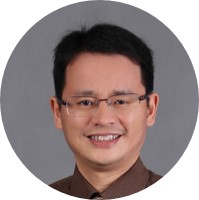
Qingsha (Shasha) Cheng received the B.Eng. and M.Eng. degrees in automation from Chongqing University, China, in 1995 and 1998, respectively, and the Ph.D. degree in electrical engineering from McMaster University, Canada, in 2004 (Advisor: Prof. John W. Bandler). He is currently an Associate Professor at Southern University of Science and Technology in Shenzhen, China. He is a Senior Member of IEEE and has published over 200 papers, including 4 book chapters and 30+ invited presentations.
His research interests include space mapping, surrogate modeling, simulator-based tuning, multi-objective optimization, microwave circuit and antenna design, electromagnetic compatibility modeling, and AI applications in electromagnetic design.
He worked with Peking University in 1998 and joined the Simulation Optimization Systems Research Laboratory at McMaster University in 1999, later serving as a postdoctoral fellow, research associate, research engineer, and sessional lecturer.
He joined SUSTech in 2014 as an assistant professor and later became a tenured associate professor. He was appointed Adjunct Professor with the University of Regina, Canada, in 2018.
Associate Editor of International Journal of Numerical Modelling: Electronic Networks, Devices and Fields . Reviewer for leading journals including IEEE TAP, TMTT, and MWCL. Reviewer for the National Natural Science Foundation of China (NSFC) General, Youth, and Regional Project Proposals.
Award Chair of WSCE 2025, TPC Co-chair of IEEE NEMO 2025. Invited Senior Professional of IEEE MTT-S Young Professionals Workshop on Electromagnetic Modeling and Optimization. He has long organized or chaired sessions for IEEE IMS, NEMO, ACES, and ICCEM.
Y. Kuang, Z. Fang, and Q.S. Cheng, “Artificial neural network-assisted multi-surrogate optimization framework for high-frequency antenna design,” in Artificial Neural Networks for High-Frequency Design, S. Koziel and A. Pietrenko-Dabrowska (Eds.), Springer, 2026. ISBN: 978-3-032-29944-4.
Q.S. Cheng and Y. Kuang, "Surrogate Model Design," Electromagnetic Information Theory White Paper,Huawei 2012 Lab, 2023.
Q.S. Cheng and Z. Zhang, "Sampling methods for surrogate modeling and optimization," in Surrogate Modeling for High-Frequency Design, S. Koziel, and A. Pietrenko-Dabrowska (Eds.), World Scientific, March 2022.
S. Koziel, S. Ogurtsov, Q.S. Cheng, and J.W. Bandler, "Space mapping," in Simulation-Driven Design Optimization and Modeling for Microwave Engineering, S. Koziel, X.S. Yang, and Q.J. Zhang (Eds.), Imperial College Press, 2013, pp. 81-105.
Q.S. Cheng, J.W. Bandler, and S. Koziel, "Tuning space mapping," in Simulation-Driven Design Optimization and Modeling for Microwave Engineering, S. Koziel, X.S. Yang, and Q.J. Zhang (Eds.), Imperial College Press, 2013, pp. 107-128.
The people page can organize researchers by role, degree status, and alumni year while keeping each profile compact and consistent.
Research Assistant Professor
Postdoctoral Fellow
Postdoctoral Fellow
Postdoctoral Fellow
Ph.D. student (co-supervised with WONG Hang Steve, CityU, Hong Kong)
Ph.D. student
Ph.D. student
Ph.D. student
Ph.D. student
Ph.D. student
Master’s student
Master’s student
Master’s student
Master's student
Master's student
Master's student
Ph.D. (co-supervised with Paul Laforge, University of Regina, Canada) (Graduated 2021)
Ph.D. (co-supervised with Paul Laforge, University of Regina, Canada) (Graduated 2021)
Ph.D. (co-supervised with Ross Murch, HKUST, Hong Kong) (Graduated 2021)
Ph.D. degree (co-supervised with Michael Lancaster and Yi Wang, University of Birmingham, UK and Bo Liu, University of Glasgow, UK) (Graduated 2022)
Ph.D., SUSTech-HIT joint Ph.D. program (Graduated 2022, Guangzhou University)
Ph.D. (co-supervised with Yaping Du, the Hong Kong Polytechnic University) (Graduated 2023)
Ph.D. student (co-supervised with Zhining Chen, National University of Singapore)
Ph.D. student (co-supervised with Ross Murch, HKUST, Hong Kong)
Ph.D. student (co-supervised with Yaping Du, the Hong Kong Polytechnic University)
Master’s student(Graduated 2026)
Master’s student(Graduated 2026)
Master’s student(Graduated 2026)
Master’s degree (Graduated 2018)
Master’s degree (Graduated 2019)
Master’s degree (Graduated 2019)
Master’s degree (Graduated 2020)
Master’s degree (Graduated 2022)
Master’s degree (Graduated 2022)
Master’s degree (Graduated 2022)
Master’s degree (Graduated 2024)
Master’s degree (Graduated 2024)
Master’s degree (Graduated 2024)

The em+ Lab welcomes applications and inquiries from prospective master's students, Ph.D. students, postdoctoral fellows, and engineers interested in electromagnetic modeling, microwave CAD, antenna optimization, surrogate modeling, and simulation-driven design.
News and teaching content should use the same calm visual language as publications: compact, dated, and easy to scan.
Learn nonlinear optimization concepts/algorithms;Learn application of nonlinear optimization ;Learn Matlab and Optimization Toolbox ;Identify optimization problem and suggest possible optimization algorithms ;Solve optimization problems using Matlab.
This course covers the fundamental topics in antennas and propagation. It is composed of two parts: one part on antennas and another on propagation. The antennas section covers dipole and monopole antennas, microstrip and slot antennas, wideband and frequency-independent antennas. The propagation section coversbasic path loss models, large-scale and small-scale fading, channel measurements and channel modeling.
This course introduces convolution, LTI systems, continuous-time Fourier series, the continuous-time Fourier transform, discrete-time Fourier series, the discrete-time Fourier transform, sampling, introduction to amplitude and angle modulations.
Latest journal and conference updates for the front page.
We are always looking for motivated Master's, Ph.D. students, and Postdocs. Feel free to reach out.